News

20240516_WS_AaMaas_WP4_LUH
Read More

First SpongeLab Workshop in Aa and Maas

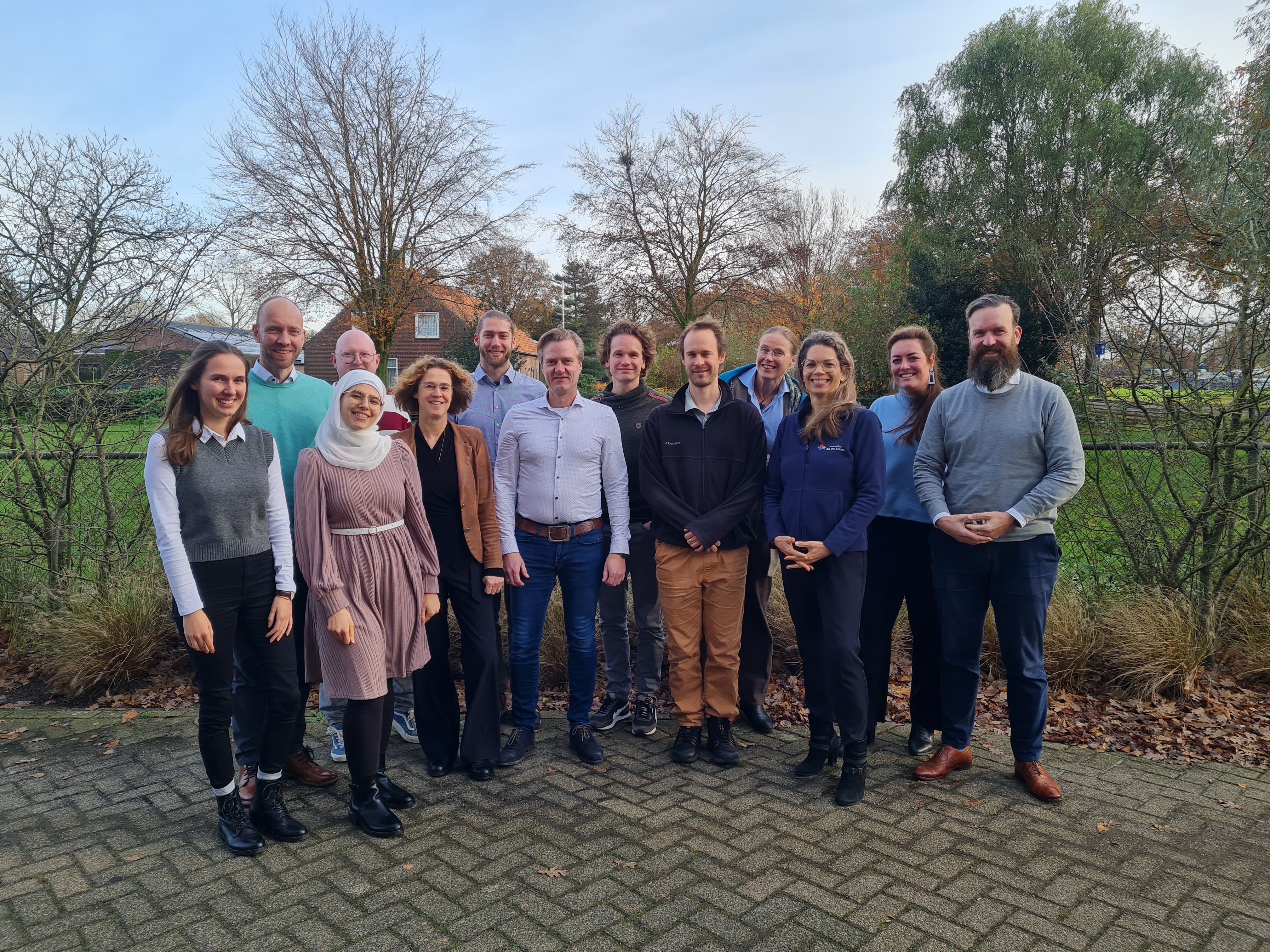
On May 16, 2024, SpongeScapes kicked off its first SpongeLab workshop in Loosbroek, The Netherlands, introducing the geodesign approach to local stakeholders in the Aa and Maas management area.  

The workshop was organized by Leibniz Universität Hannover, which is leading work package 4 of the SpongeScapes project, “Co-assessing sponge strategies and enabling environments" together with Deltares and the Regional Water Authority Aa and Maas.  

NAC 2024 conference
Read More

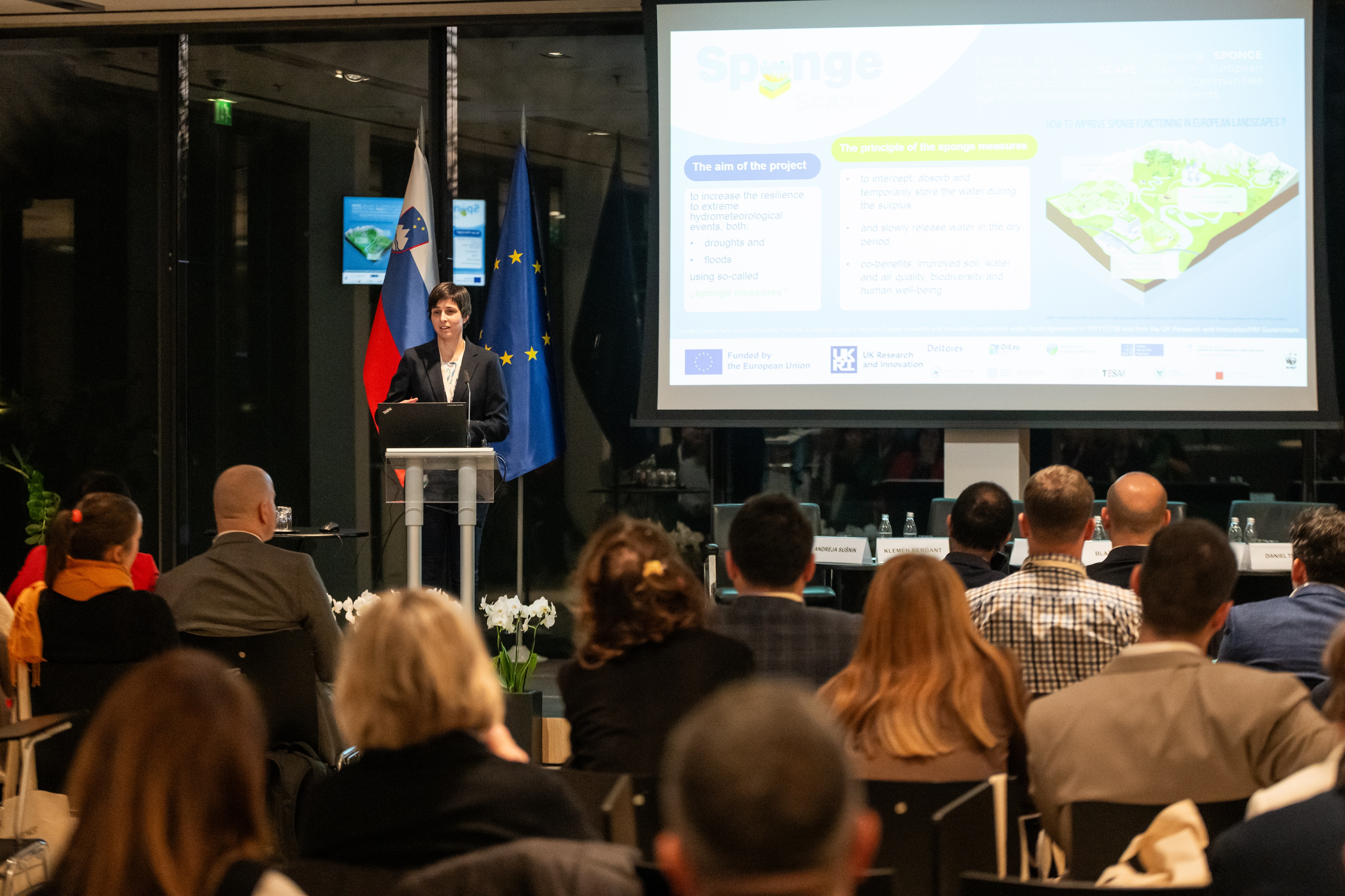
SpongeScapes at the NAC 2024 conference

Last Friday, 8 March, Ellis Penning and Christopher Wittmann (Deltares) presented SpongeScapes at the NAC2024 conference, during a session dedicated to climate resilient sandy soil research in the Netherlands. The aim is to harmonise the work of the various Dutch-funded research projects on this topic.

SpongeScapes kick off meeting
Read More

Horizon Europe SpongeScapes Project Kicked -off in October 2023

Last week, 25-27 October, the EU-Horizon SpongeScapes project kick-off meeting took place in Delft, the Netherlands.

 For three intensive days, colleagues from the 10 different partner organisations participated in workshops, a field visit and insightful discussions to enhance the sponge function of soil, groundwater and surface water systems. 

Sponge function of landscapes refers to the ability of natural or managed ecosystems to absorb, store and slowly release water, thereby mitigating floods and droughts.

SpongeScapes, Wallingford, 2025
Read More

Beyond the Flood: Evaluating the Full Impact of Sponge Measures – A New SpongeScapes Research Paper

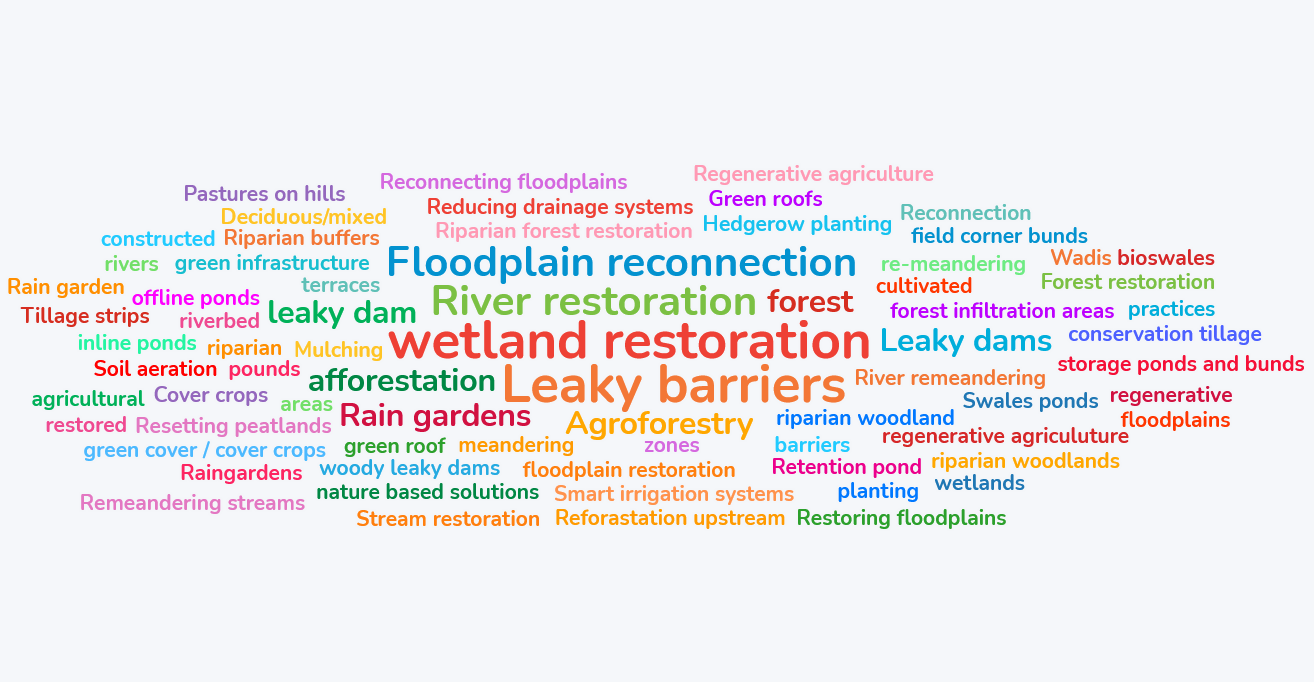
As nature-based solutions gain momentum across Europe, a new study from SpongeScapes Italian partners from the University of Padova  broadens the lens on how we evaluate  sponge measures (Natural Water Retention Measures -NWRMs - in their article)— going beyond flood mitigation and groundwater recharge to also consider, among others, social and economic dimensions.

A More Complete Framework for Evaluation

The study proposes a structured approach to classify both positive (benefits and co-benefits) and negative (trade-offs) impacts of sponge measures, for example: