Italy

Changing landscapes, changing mindsets: SpongeScapes gathers in Padua for its General Assembly


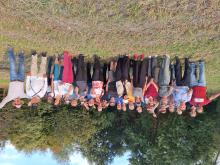
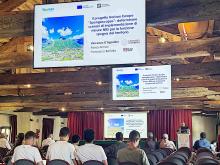
The SpongeScapes team gathered in Padua, Italy, from 15 to 17 September for three days of discussions, exchange and field visits as the project enters its final year of implementation.

Hosted at Corte Benedettina, a former monastery dating back to the 15th century and now used by the University of Padua, the General Assembly brought partners together to review progress and look ahead to the months ahead, when the project’s monitoring and modelling results, guidance, toolkits and other outputs will come together.
National Sponge Day in Italy: researchers and land managers join forces to advance sponge landscapes

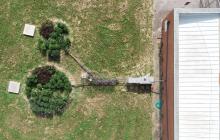
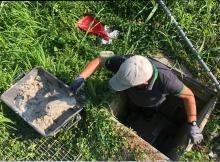
Summer maintenance of monitoring stations for two SpongeScapes case studies in Italy

11 Agripolis site IT

The Agripolis site (see also related case studies 09 and 10) is located near the Venetian Pre-Alps, crossed by the Leogra and the Timonchio rivers and artificial channels crucial for historical manufacturing, irrigation, and runoff control. The case study is located in the Veneto region that signed the Mission Charter of the EU Mission on Climate Adaptation.
 

12 Bosco Limite IT

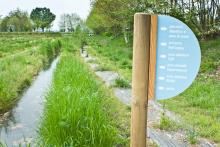
Bosco Limite is located in the middle basin of the Brenta river, in the northwestern part of the Po valley (Veneto Region, Italy). Bosco Limite is the largest forest infiltration area in the Venetian plain and an expansion design is currently under development.

09 Municipality of Santorso sites IT

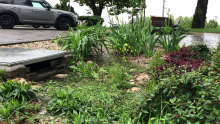
The municipality of Santorso (see also related case studies 10 and 11) is located near the Venetian Pre-Alps, crossed by the Leogra and the Timonchio rivers and artificial channels crucial for historical manufacturing, irrigation, and runoff control. The case study is located in the Veneto region that signed the Mission Charter of the EU Mission on Climate Adaptation.
 

10 Timonchio site IT

The Timonchio site (see case studies 09 and 11) is located near the Venetian Pre-Alps, crossed by the Leogra and the Timonchio rivers and artificial channels crucial for historical manufacturing, irrigation, and runoff control. The case study is located in the Veneto region that signed the Mission Charter of the EU Mission on Climate Adaptation.