Slovenia

Trees, Rain and Flood Risk in Ljubljana: What Science Tells Us

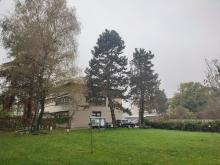
In Ljubljana’s hilly pre-alpine landscape, forests are more than just a scenic backdrop. They play a crucial role in managing rainwater and reducing flood risks for downstream urban areas. Within the SpongeScapes project, scientists are taking a closer look at how different tree species influence rainfall, soil moisture, and the local water cycle in the Gradaščica catchment.

How Trees Interact with Rain

When it rains, not all water reaches the ground.

Calibrating Hydrological Models to Understand Forests’ Role in Water Retention in Slovenia

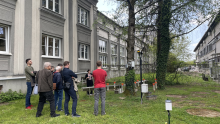
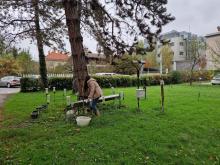
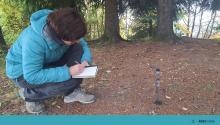
In October 2025, as part of the SpongeScapes project, researchers from the Slovenian Environment Agency (ARSO) conducted a field visit to the Gradaščica catchment near Ljubljana, Slovenia, to collect essential data for the calibration of their hydrological model. This work will help improve understanding of how forest cover influences rainfall runoff and the catchment’s capacity to retain water — key to managing both floods and droughts.

Understanding the Landscape

08 Gradaščica catchment SI

The Gradaščica catchment in Ljubljana is located in a hilly pre-alpine region, with elevations ranging from 300 to 1000 meters above sea level. Approximately 70% of this area is forested, mainly with broad-leaved and mixed forests, which play a crucial role in the local ecosystem and water management. Within SpongeScapes, we are investigating how trees reduce rainwater run-off, which is crucial in flood-prone areas.