Flood risk in agricultural landscapes is often the result of decades of land use change. In the Evenlode river basin in southern England, a headwater tributary of the River Thames, river straightening, sedimentation in the river, soil compaction, and increasing built surfaces have reduced the land’s ability to absorb water. As a result, water runoff moves more quickly through the landscape, increasing flood risk on downstream communities. In 2007, a major storm flooded homes in one of the villages.
Can regenerative agriculture restore the soil’s sponge ability? Lessons from the Thames basin near Oxford (UK)
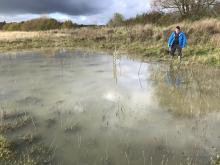
Picture: infiltration test at Upper Thames conventional agricultural practice site (infield, where crops grow). (Neeraj Sah, UKCEH)
In the Thames basin, agriculture dominates the landscape. Decades of intensive farming and heavy machinery have reduced the soil’s ability to absorb and retain water.
Today, farmers are testing regenerative practices, while researchers monitor how these approaches can restore the soil’s natural ‘sponge’ function.
SpongeScapes General Assembly in Wallingford Marks a Year of Advancing European Climate Adaptation Research
Wallingford, UK – October 23-25, 2024
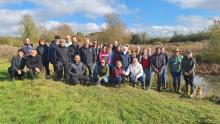
The UK Centre for Ecology & Hydrology (UKCEH) hosted the SpongeScapes General Assembly in Wallingford from 23 to 25 October 2024. SpongeScapes is a major European initiative aimed at improving resilience against climate extremes, such as floods and droughts. The General Assembly brought together all project partners from across Europe to review the first year of progress, plan for the year ahead, and visit key UK case study sites.